Japanese Tobacco Culture
Kiseru Pipe: The Traditional Japanese Tobacco Pipe
A kiseru is a slender Japanese pipe with a metal bowl and mouthpiece, usually joined by a bamboo stem, made to smoke a small pinch of finely shredded kizami tobacco.
Updated · Cigars Japan Editorial Team
Read Japan Tobacco History →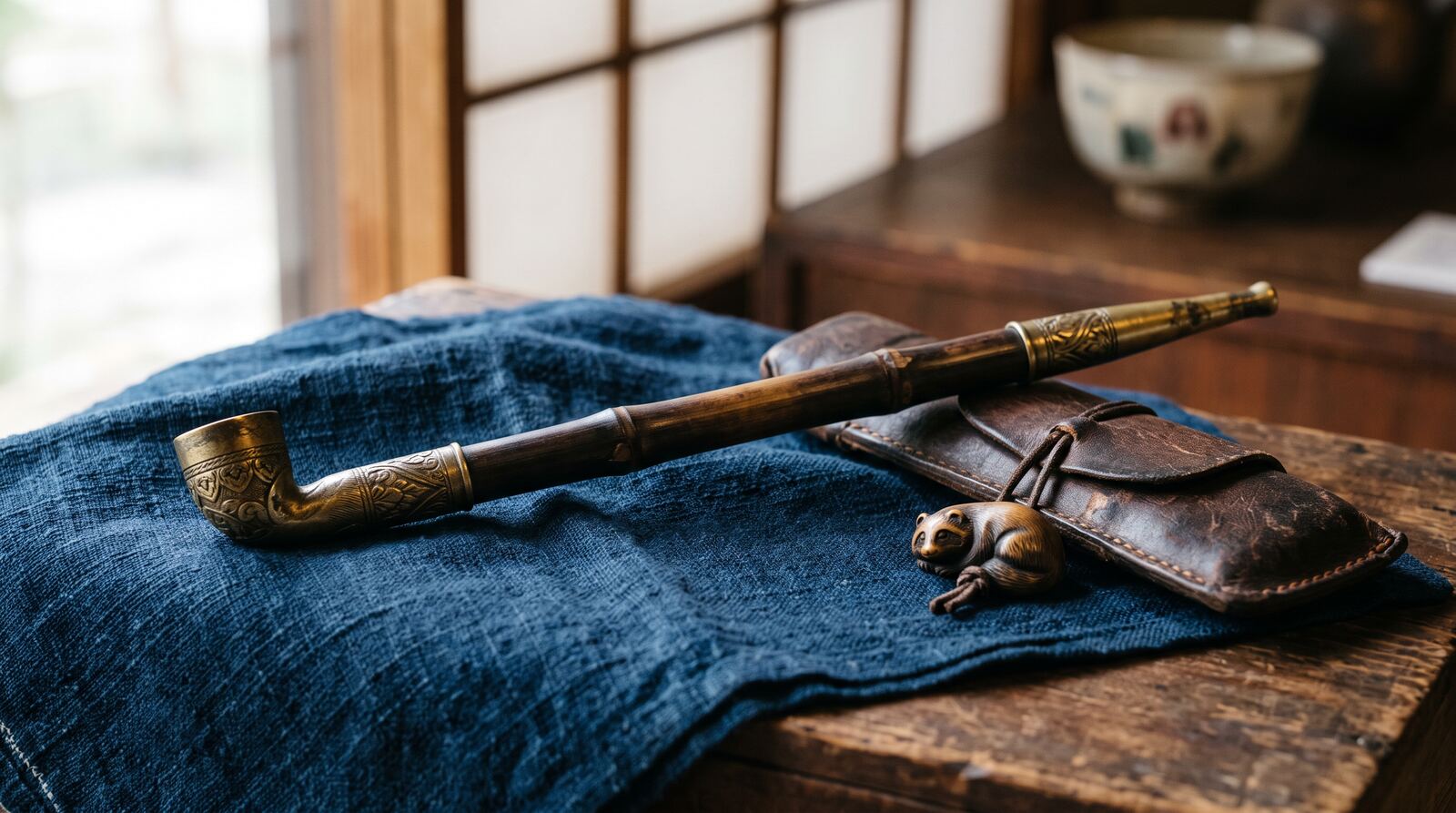
The kiseru is Japan's own answer to the question of how to smoke tobacco. It looks nothing like a European briar pipe. Its bowl is a small metal cup, often no bigger than a fingertip, and the whole pipe is usually long and thin. For about three hundred years it was the main way people in Japan smoked.
Parts of a Kiseru
A classic rau kiseru has three parts:
- Gankubi and bowl — a metal head with a tiny bowl that holds the tobacco.
- Rau — the stem, traditionally bamboo, which connects the two metal ends.
- Suikuchi — the metal mouthpiece.
A nobe kiseru is made from a single piece of metal. Metal parts were usually brass or silver, beaten into shape and joined with silver solder, and many were engraved. A typical kiseru is about 15–25 cm (6–10 in) long.
Kizami: The Tobacco
A kiseru is filled with kizami, tobacco cut into extremely fine threads. The smoker rolls a small ball, presses it into the bowl, lights it, and takes just a few puffs before tapping out the ash and refilling. A smoking session is a series of short smokes, not one long one, which made the kiseru suited to brief pauses in the day.
How Tobacco Reached Japan
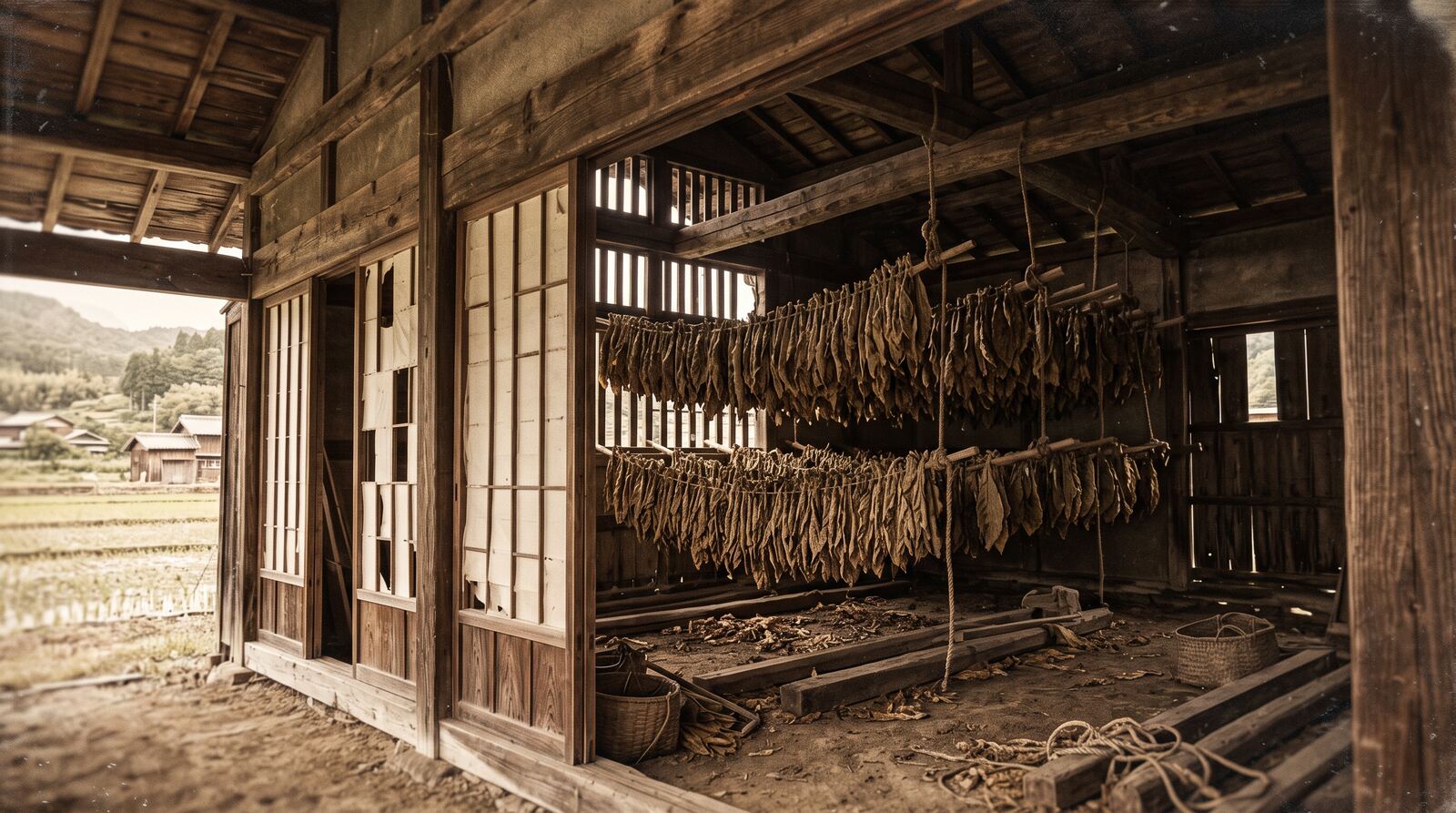
Tobacco reached Japan in the late 1500s, around the time of the first European traders; historians date it to the 1570s at the earliest. Imported tobacco was expensive, and smoking began as a luxury of the wealthy. Japanese farmers soon grew their own, and smoking spread through all classes.
The Edo Period
During the Edo period (1603–1868) the kiseru became a fashion object. Samurai and townspeople (chōnin) carried pipes of brass or silver with fine engraving, kept in cases that hung from the sash with a tobacco pouch and a carved netsuke toggle. Pipes, cases and pouches were made by skilled metalworkers and leatherworkers, and today they are collected and shown in museums. Woodblock prints of the period often show courtesans, actors and travelers holding a kiseru.
The Kiseru as a Weapon
Some kiseru were never meant just for smoking. The kenka kiseru ("brawling pipe"), about 12–18 inches long and made of cast iron or brass, was carried by gamblers and street toughs. Samurai who were not wearing swords might carry a heavy buyō kiseru of about 16 inches. Some martial schools taught kiseru-jutsu, a fighting method similar to the use of the iron war fan.
Decline After Meiji
After the Meiji Restoration of 1868, Western-style cigarettes arrived and quickly caught on. The kiseru lingered in the countryside for decades but steadily disappeared from daily life. When the state took over the tobacco business in 1904, manufactured cigarettes became the standard product. Read more in Japan Tobacco history.
The Kiseru Today
Only a few artisans still make kiseru by hand. Collectors buy antique pipes for their metalwork, and a small group of pipe smokers still use them. Antique kiseru with intact engraving and original stems command the highest interest. If you are curious about pipes more generally, our sister site covers cigar and pipe accessories.
Kiseru vs. Western Pipe
| Kiseru | Briar pipe | |
|---|---|---|
| Bowl size | Tiny metal cup | Large wooden bowl |
| Tobacco | Kizami, cut very fine | Ribbon, flake or plug |
| Smoke length | A few puffs | 30–60+ minutes |
| Materials | Brass, silver, bamboo | Briar, meerschaum, vulcanite |
Frequently Asked Questions
What is a kiseru?
A traditional Japanese smoking pipe with a small metal bowl and mouthpiece, usually joined by a bamboo stem.
What tobacco goes in a kiseru?
Kizami, tobacco shredded into very fine threads and rolled into a small ball for the bowl.
How long is a kiseru?
Most are about 15–25 cm (6–10 in); fighting kiseru could reach about 18 inches.
What is a kenka kiseru?
A heavy iron or brass "brawling pipe" carried by gamblers and toughs as a weapon.
Why did people stop using kiseru?
Cigarettes arrived after the Meiji Restoration of 1868 and quickly replaced the kiseru in everyday life.